
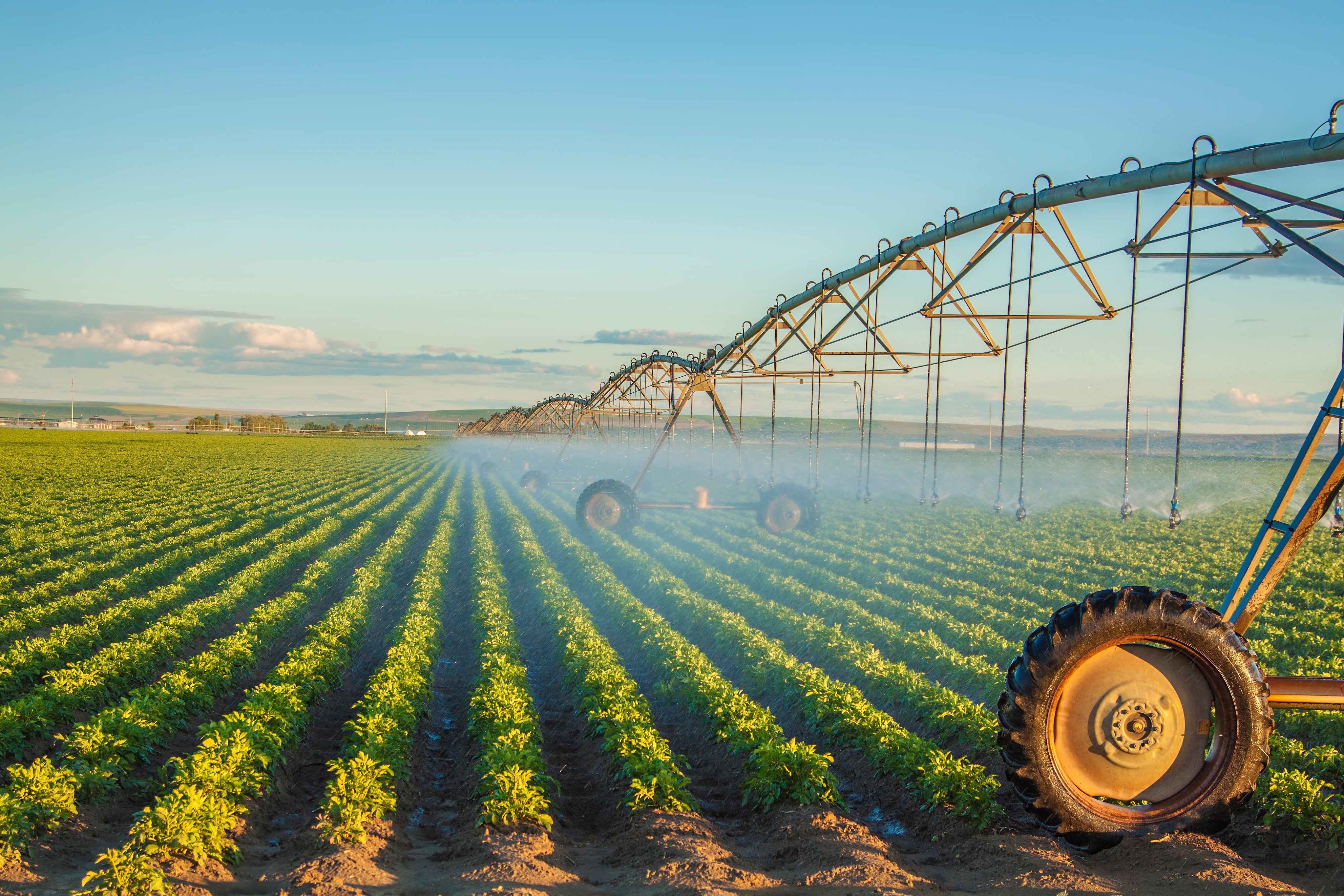
With funding provided by the Nebraska Corn Board and in partnership with the Natural Resources Districts (NRDs), the Nebraska Department of Water, Energy and Environment (DWEE) is administering the Nebraska Nitrogen Use Efficiency (NUE) Program. The purpose of this program is to encourage Nebraska corn producers to improve NUE in their corn fields. Participants are incentivized to achieve a NUE of 1.0 or under for the 2026 crop as described below. Improving NUE can deliver meaningful economic and environmental benefits without sacrificing productivity.
Key Objectives:
- Provide an incentive payment for qualifying fields that achieve a NUE at or below 1.0 lb/acre per bu/acre on 2026 corn crop
- Improve profitability by reducing nitrogen input costs
- Protect water quality by reducing pounds of nitrogen applied
What is Nitrogen Use Efficiency (NUE)?
Nitrogen Use Efficiency (NUE) measures how effectively a crop converts available nitrogen (N) into harvested grain yield, quantifying the relationship between N inputs and crop output. NUE accounts for total available N by including credits such as soil, water, legumes, and manure (lbs./acre) divided by grain yield (bu/acre).
NUE Equation:
This program uses a simplified, tailored nitrogen use efficiency (NUE) metric. The metric intentionally focuses on key, measurable nitrogen sources and does not capture every possible source of N available to the crop. This deliberate simplification creates a clear, consistent benchmark that serves as an educational tool for participating farmers who want to challenge themselves to achieve higher nitrogen use efficiency.
Participation in this program is not intended to replace comprehensive nutrient management planning. Metrics, targets, and reporting requirements may be adjusted each year based on feedback from participating farmers, Natural Resources Districts (NRDs), and other stakeholders. Producers should reach out to NRDs or UNL for guidance on precision tools, split application guidance, on-farm research, nitrogen initiative, inhibitors, etc.
Equation: 𝑁𝑈𝐸=(𝐴𝑝𝑝𝑙𝑖𝑒𝑑 𝑁 + 𝐶𝑟𝑒𝑑𝑖𝑡𝑒𝑑 𝑁)(𝑙𝑏𝑠 / 𝑎𝑐𝑟𝑒𝑠) / 𝐺𝑟𝑎𝑖𝑛 𝑦𝑖𝑒𝑙𝑑 (𝑏𝑢 / (𝑎𝑐𝑟𝑒))
Eligible NUE Credit Standards:
- Irrigation Water
- Water applied (inches) Nitrogen concentration (ppm) * Conversion factor (lbs.)
- Conversion factor is 0.226
- Water applied (inches) Nitrogen concentration (ppm) * Conversion factor (lbs.)
- Residual Nitrogen in Soil
- Residual Soil N (ppm) * Conversion factor (lbs./ac/ppm)
- Conversion factor is 8
- Residual Soil N (ppm) * Conversion factor (lbs./ac/ppm)
- Organic Matter Mineralization in Soil
- Expected yield (bushels) * Organic Matter (%) * Conversion Factor (lbs.)
- Conversion factor is 0.14
- Expected yield (bushels) * Organic Matter (%) * Conversion Factor (lbs.)
- Manure
- Amount applied (gal, tons) * Nitrogen amount (lbs./ gal or tons) * Availability (%)
- Default availability metric: 40% available in the first year. 20% in the second year, 10% in the third year
- Nitrogen content and availability van vary by manure type. Manure nutrient test results should be utilized in place of the default metric when available
- Amount applied (gal, tons) * Nitrogen amount (lbs./ gal or tons) * Availability (%)
- Legume
- 45 lbs. for soybeans and 100 lbs. for alfalfa
Program Structure:
For the 2026 cropping season, applications are due May 15th, 2026, pending funding status, and will be subject to NRD approval. NRD will review and prioritize the applications based on available funding. Methods for application prioritization will be established by each NRD, with applicants notified no later than August 15th, 2026, whether their application has been approved or denied. NRDs may ask for additional data, and NRDs reserve the right to rank applications by priority areas. Payment rates are the same statewide.
| Requirements | Threshold | Payment Rate |
|---|---|---|
| NUE at or below threshold | At or below 1.0 lb available N/bu | $15/ ac |
Eligibility Requirements
- Producers must be located within the state of Nebraska
- Producers must be in good standing with NRD
- Field must be planted to corn for the 2026 growing season
- Data must be submitted for nitrogen applied (2025-2026), the actual 2026 yield, and all credits used, per NRD guidance
- Maximum 160 acres of corn per application (multiple applications allowed)
- Producers that have not been previously successful in the Nitrogen Reduction Incentive Act (NiRIA)
NUE Calculation Guidance:
NUE will be calculated by adding applied nitrogen and credited nitrogen through soil, water, and manure samples and dividing that by the yield. To estimate manure, please use your manure test values in place of a default value if available.
Required Data:
- Soil Sample per District Guidance
- Samples need to be taken prior to 2026 planting season OR fall of 2025
- To determine residual soil nitrate and organic matter
- Samples need to be taken prior to 2026 planting season OR fall of 2025
- Irrigation Water Samples (if applicable)
- Water sample needs to be taken during the irrigation season
- To determine residual water nitrate
- Water sample needs to be taken during the irrigation season
- Manure Sample per District Guidance (if applicable)
- Sample needs to be taken prior to planting
- To determine residual manure nitrogen
- Sample needs to be taken prior to planting
Documentation of soil, water, and manure samples must be submitted to NRDs before the payment deadline, or the producer forfeits payment. Some sort of documentation of yield data may be required to verify NUE. Check with your local NRD on the required data.
Example 1: Corn /Corn Rotation, Non- Irrigated
- Yield: 200 bu/acre
- Residual Soil N: 5 ppm
- Organic Matter: 2%
- Total Nitrogen Applied:
- Manure (cattle slurry): 10,000 Gallons/acre with 0.021 lbs N/gal
- Synthetic: 20 lbs
Nitrogen Credits:
Residual soil nitrate- N = 5 ppm x 8 lbs./ac/ppm= 40 lbs. N/acre
Organic matter mineralization = 0.14 x 200 x 2 = 56lbs. N/acre
Manure= 10,000 Gallons x 0.021 lbs. N x 0.4 (40% available the first year)= 84 lbs. N/acre
Total non-fertilizer credits= 40+56+84= 180 lbs. N/acre
NUE Calculation: (180+20) / 200 = ~1.0 NUE
Data Standard Values:
- Residual soil nitrate-N= 8 lbs/ac/ppm
- Organic matter mineralization = 0.14
- Manure = 40%
Example 2: Corn /Soybean Rotation, Irrigated
- Yield: 230 bu/acre
- Residual Soil N: 5 ppm
- Organic Matter: 2%
- Total Nitrogen Applied:
- Synthetic: 45 lbs.
- Irrigation Water: 5 in. at 12 ppm
Nitrogen Credits:
Residual soil nitrate-N = 5 ppm x 8 lbs./ac/ppm= 40 lbs. N/acre
Organic matter materialization = 0.14 x 230 x 2 = 64.4 lbs. N/acre
Irrigation water nitrate= 12 ppm x 5 inches x 0.226 = 13.56 lbs. N/acre
Legume credit = 45 lbs.
Total non-fertilizer credits = 40 + 64.4 +13.56+45 = 162.96 lbs. N/acre
NUE Calculation:(45 + 162.96) / 230 = ~.90 NUE
Data Standard Values:
- Residual soil nitrate- N = 8 lbs./ ac/ ppm
- Organic matter mineralization= 0.14
- Irrigation water nitrate = 0.226
- Legume credit = 45 lbs
Application Process and Timeline:
- Applications are due to the local NRD by May 15th, 2026
- Producers will be notified if accepted into the program no later than August 15th, 2026
- Upon acceptance, yield data, soil and water sample data is due to the NRD before January 15th, 2027
- Payments to producers that successfully achieved an NUE of 1.0 or under will be paid by NRDs before May 15th, 2027
How to Apply:
- Paper applications can be submitted to NRDs, or an online application can be submitted
- Link: Online NUE Application

Payment Schedule & Deadlines:
- Final Data submission by January 15th, 2027
- Payment to producers by May 15th, 2027
Producer Application & Reporting Requirements:
- Yield data must be submitted to NRD before January 27th, 2027, on 2026 season corn
- Soil samples must be submitted to NRD before January 27th, 2027, on 2026 season corn. Samples must be to NRD specifications
- If applicable, irrigation water samples must be submitted to NRD before January 15th, 2027, for the 2026 season corn
- If applicable, manure samples must be submitted to NRD before January 15th, 2027, for the 2026 season corn
Program Timeline:
- Applications due to NRD by May 15th, 2026
- NRD approval/denial by August 15th, 2026
- Final data submission to NRD by January 15th, 2027
- Payment to producers by May 15th, 2027